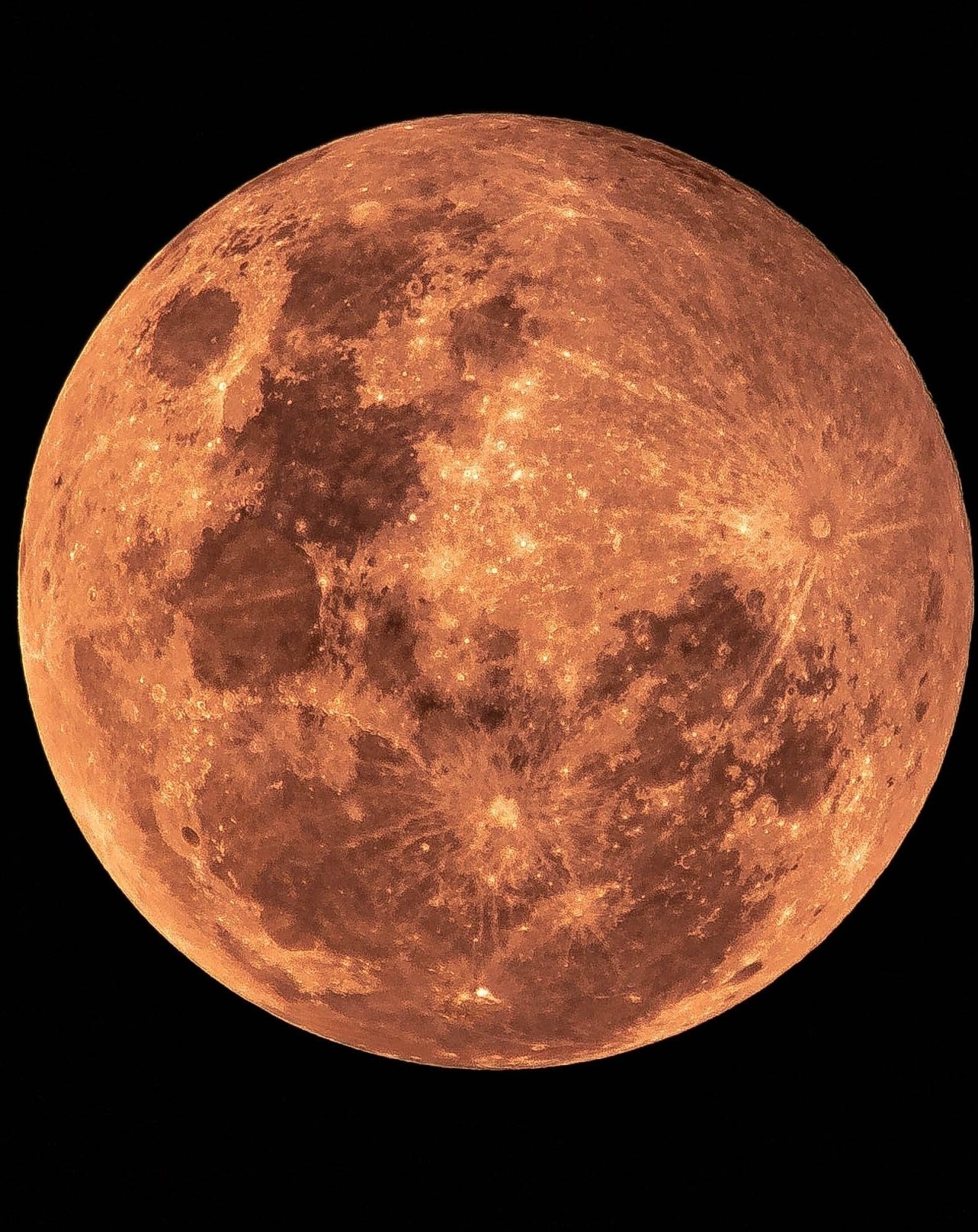
VENUS
Although it's similar in structure and size to Earth, Venus has a thick atmosphere that traps heat in a runaway greenhouse effect, making it the hottest planet in our solar system.It's a cloud-swaddled planet named for a love goddess, and often called Earth’s twin. But pull up a bit closer, and Venus turns hellish. Our nearest planetary neighbor, the second planet from the Sun, has a surface hot enough to melt lead. The atmosphere is so thick that, from the surface, the Sun is just a smear of light. In some ways it is more an opposite of Earth than a twin: Venus spins backward, has a day longer than its year, and lacks any semblance of seasons.
It might once have been a habitable ocean world, like Earth, but that was at least a billion years ago. A runaway greenhouse effect turned all surface water into vapor, which then leaked slowly into space. The present-day surface of volcanic rock is blasted by high temperatures and pressures. Asked if the surface of Venus is likely to be life-bearing today, we can give a quick answer: a hard “no.” Further, Venus may hold lessons about what it takes for life to get its start – on Earth, in our solar system, or across the galaxy.
The ingredients are all there, or at least, they used to be. By studying why our neighbor world went in such a different direction with regard to habitability, we could find out what could make other worlds right. And while it might sound absurd, we can’t rule out life on Venus entirely. Temperature, air pressure, and chemistry are much more congenial up high, in those thick, yellow clouds.
Tourism In Venus
Landing on surface of venus is not practical although we have various tourism ideas which you can explore from outer orbit.
Let's test your photography skills
Let's test your photography skills. Can you click the same picture you see on internet or is it just fake. Let's find out with us.
Learn MoreVenus Flyby
Witness the morninng and evening star with your own eyes from up close.Have a sight of the wonderful burning planet.It would be a wonderful sight.
Learn MoreVirtual Visit
Not everyone can fly in the spaceship and enjoy the wonderful sight. For them we have virtual reality houses. You can enjoy the space from here too.
Learn MoreCATEGORY
Extreme Temperatures
Venus has an incredibly hot surface, with temperatures that can exceed 900 degrees Fahrenheit (475 degrees Celsius). It's the hottest planet in our solar system, even hotter than Mercury, despite being farther from the Sun.
Learn MoreCATEGORY
Thick Atmosphere
Venus has an incredibly dense and mostly carbon dioxide atmosphere. The atmospheric pressure on Venus is about 92 times that of Earth, which is equivalent to the pressure found 900 meters (3,000 feet) underwater on Earth.
Learn MoreCATEGORY
Venusian Volcanoes
Venus has a high number of volcanoes, including some of the largest and most massive in the solar system. These volcanoes are thought to be primarily responsible for resurfacing the planet's surface.
Learn MoreCATEGORY
Magellan Mission
NASA's Magellan spacecraft, launched in 1989, used radar to map almost the entire surface of Venus, revealing details about its topography, geology, and volcanic features.
Learn MoreCATEGORY
Covered in clouds
Venus is covered by thick clouds made primarily of sulfuric acid, which reflects sunlight. These clouds create a permanent, overcast sky on the planet and obscure its surface from visible light observations.
Learn MoreCATEGORY
Longer day than year
Venus has an exceptionally slow rotation on its axis, taking about 243 Earth days to complete one full rotation. In contrast, it orbits the Sun in approximately 225 Earth days. This means that a day on Venus (one rotation) is longer than its year (one orbit around the Sun). As a result, Venus has the longest day-night cycle of any planet in our solar system, lasting about 117 Earth days of daylight followed by 117 Earth days of nighttime.
Learn More